
Imagine you are deciding whether to spend £100 today on a meal out, or save it for a year. If a friend offered to borrow that £100 for twelve months, what would you charge them in interest? £5? £50? You'd quote a number that reflected, among other things, your personal preference for now over later. Austrians call this time preference. They put it at the centre of the entire theory of capital and interest. Interest is the price of time itself, not the price the central bank announces.
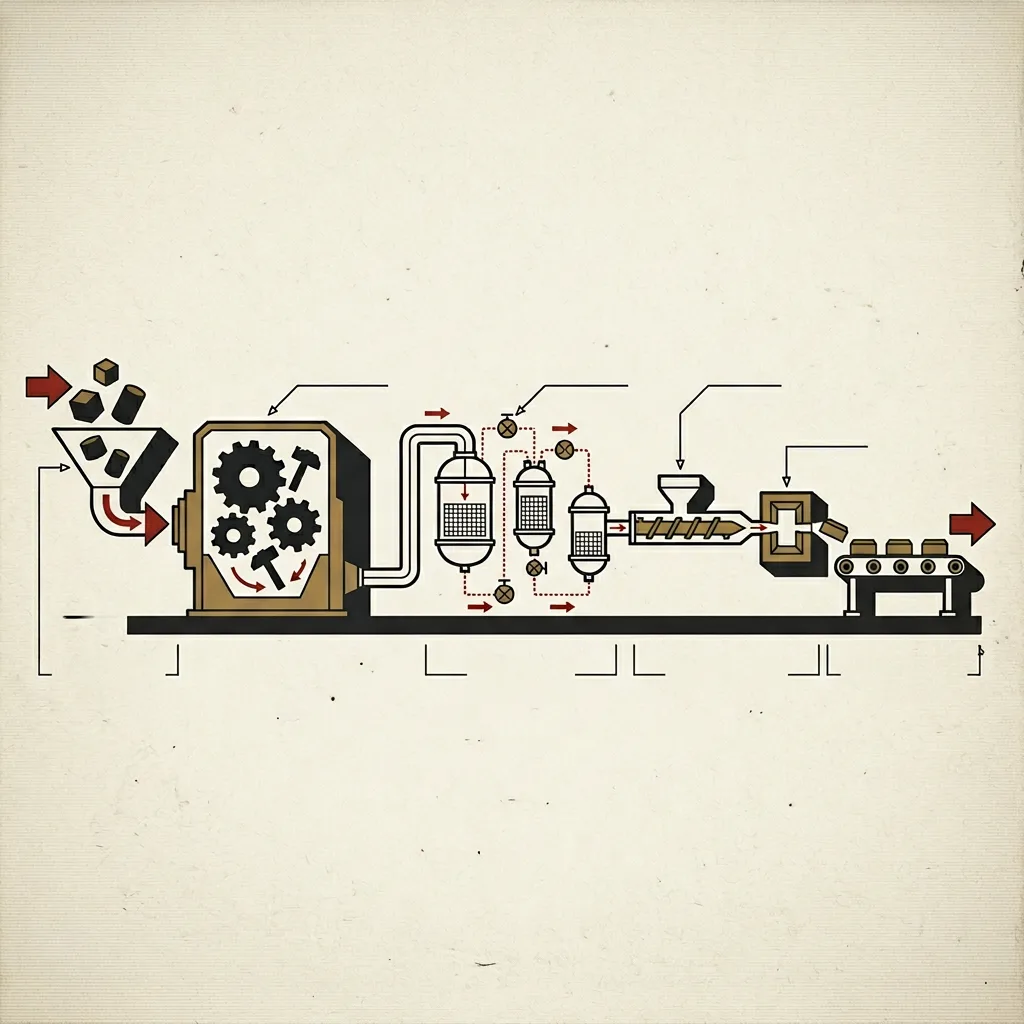
Production takes time. A loaf of bread that hits a supermarket shelf on Tuesday started as wheat sown nine months earlier, which depended on a tractor manufactured five years before that, which depended on steel smelted in a furnace built two decades ago, which depended on iron ore mined by equipment whose design dates back half a century. Every modern good emerges from a long, time-spanning structure of production: raw materials at one end, finished consumer goods at the other, and dozens of intermediate stages in between, each one tying up capital for some span of time before the consumer good emerges.
How long is that structure? How many stages of production are profitable? That depends on the interest rate, but only on the natural interest rate, the one that emerges from people's actual time preferences as expressed in voluntary saving and borrowing. When real saving is high, the natural rate is low, and entrepreneurs find it profitable to undertake long, capital-intensive projects (because the cost of waiting is low). When real saving is scarce, the natural rate is high, and the structure of production is short and consumer-near. The interest rate coordinates production with people's actual willingness to defer consumption.
Central banks do not understand this. They treat the interest rate as a thermostat for the macroeconomy: too cold? lower it. When they push it below the natural rate by creating new credit (rather than relying on real saving), they send a false signal to every entrepreneur in the economy: people have started saving more, your long-dated projects are now profitable. Long-dated projects get launched. Capital flows to early stages of production. The structure stretches out, but the underlying real saving hasn't actually increased. The new credit was conjured. Malinvestment accumulates. This is the Austrian Business Cycle.
Every recession Austrians have ever predicted in advance has had this shape: a credit-induced boom that distorts the capital structure, followed by a bust as the unsustainable long-dated projects reveal themselves as the malinvestments they always were. 2008 was this. 2001 was this. The 1929 collapse was this. The interactive below lets you play central bank: suppress the rate, watch malinvestment accumulate as the triangle distorts, then hit the crash button. The collapse is not a bug of the system but the system reasserting reality.

“Time preference is the relative valuation of present versus future goods. It is the very essence of human action.”
“If credit expansion is not stopped in time, the boom turns into the crack-up boom; the flight into real values begins, and the whole monetary system founders.”
“The boom can last only as long as the credit expansion progresses at an ever-accelerated pace. The boom comes to an end as soon as additional quantities of fiduciary media are no longer thrown upon the loan market.”
READING LADDER
Climb at your own pace.
FIELD TEST · SIGN-IN REQUIRED
Take the quiz. Track the curriculum.
The module text is open to everyone: no account required to read. The 5-question field test and the curriculum-wide graduation stamp need a free account so we can record your progress.
SIGN IN TO TAKE THE QUIZFREE · NEW ACCOUNT TAKES 30 SECONDS