
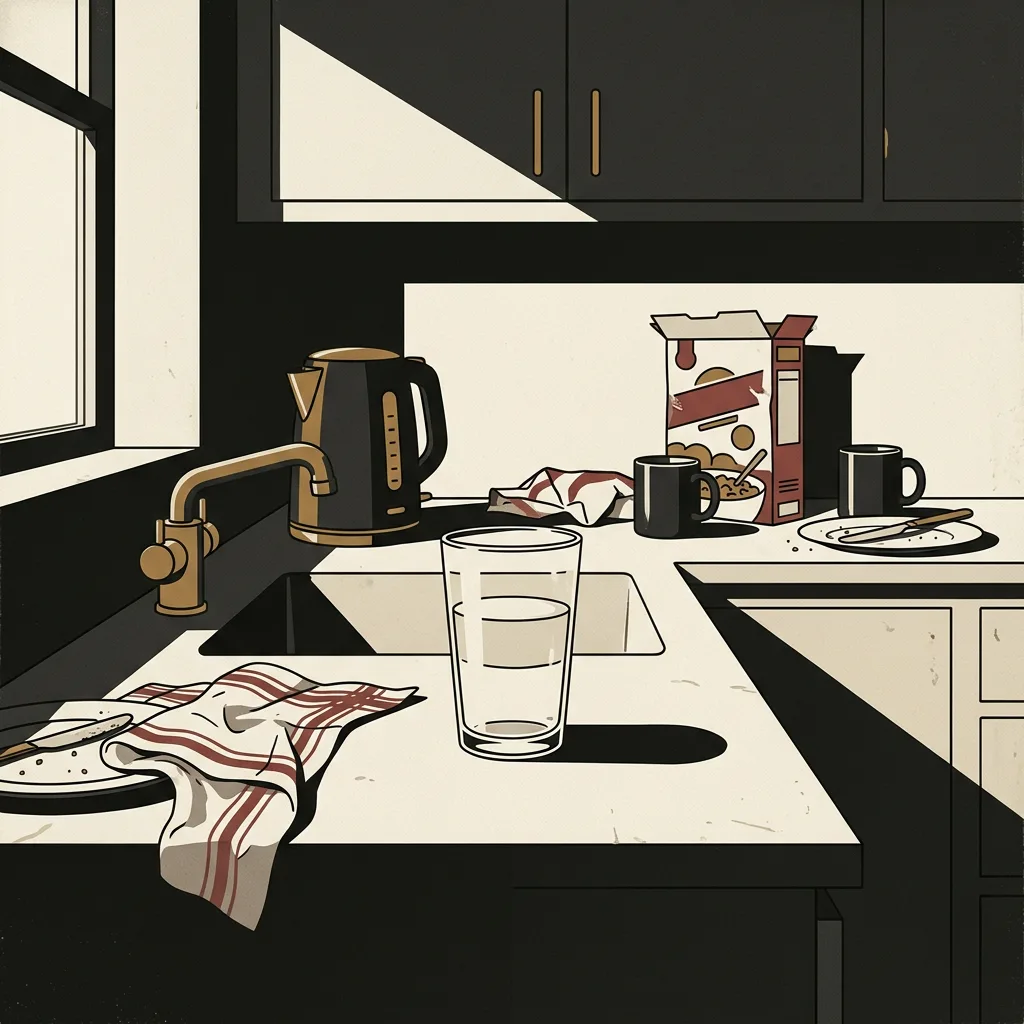
Classical economics had a problem it couldn't solve. Water is essential to life and diamonds are useless ornaments, yet diamonds command a price thousands of times higher than water. Adam Smith noticed this in 1776 and shrugged. Marx tried to fix it with a labour theory of value: things are worth what it costs in human effort to produce them. It was an elegant story. It was also wrong. The fix came from Vienna in 1871, and it rebuilt economics from the ground up.
Carl Menger's insight was deceptively simple. Value is not a property of things but a relationship between a person and a thing, in a particular situation, at a particular time. A glass of water in your kitchen, where the tap is six inches away, is worth almost nothing. The same glass of water, offered to a man dying of thirst in a desert, is worth everything he owns.
The thing didn't change. The person didn't change. The situation changed. The marginal use to which that next glass would be put, the most-pressing unmet need, is what determines its value. Economists call this marginal utility. The first glass slakes thirst. The second cooks dinner. The third washes the car. The fourth waters the lawn. Each successive glass is allocated to a less-urgent use, so each is worth less to its owner than the one before.
This destroyed three centuries of confused economic thinking in a stroke. Prices are not set by costs of production, or by some intrinsic worth, or by a Marxist ledger of labour hours. Prices emerge from the subjective marginal valuations of buyers and sellers meeting in a market. The diamond/water paradox isn't a paradox at all: it's just that diamonds are scarce relative to the demand for ornament, and water (in most places, most of the time) is abundant relative to demand for drinking. Move someone to the desert, the prices invert.
Use the interactive below. Allocate five glasses of water to five competing uses, watch utility decline at the margin, then remove the most-valued use and see how the entire valuation structure reshuffles. This is the foundation of every Austrian argument that follows: subjective, marginal, situational. There is no "true price" of anything, only the prices that emerge when people, with their preferences and their circumstances, freely trade.

“Value is therefore nothing inherent in goods, no property of them, nor an independent thing existing by itself. It is a judgement economising men make about the importance of the goods at their disposal for the maintenance of their lives and well-being.”
“There are, in the field of economics, no constant relations, and consequently no measurement is possible.”
“Repeated reflection and inquiry have led me to the somewhat novel opinion, that value depends entirely upon utility.”
READING LADDER
Climb at your own pace.
FIELD TEST · SIGN-IN REQUIRED
Take the quiz. Track the curriculum.
The module text is open to everyone: no account required to read. The 5-question field test and the curriculum-wide graduation stamp need a free account so we can record your progress.
SIGN IN TO TAKE THE QUIZFREE · NEW ACCOUNT TAKES 30 SECONDS