Module 08 of 10 · The estate
Twelve Ways Holders Lose Bitcoin
The documented failure modes, each with its fix.
In 2017, Wired published a confession by its own founding editor. Mark Frauenfelder had put 7.4 bitcoin on a hardware wallet, written the seed on a piece of paper, and gone on holiday — during which a cleaner threw the paper away and, months later, he discovered he had forgotten the PIN. He spent a sleepless season attempting guesses as the device's lockout timer doubled, and was finally rescued only by a fifteen-year-old's firmware exploit that read the secret out of the chip. Nothing about the story is exotic: a lost backup and a forgotten credential, at a technology magazine's editor's house. Study the ways holders actually lose coins and that is the pattern everywhere — not genius attackers, but ordinary failures nobody had rehearsed against.
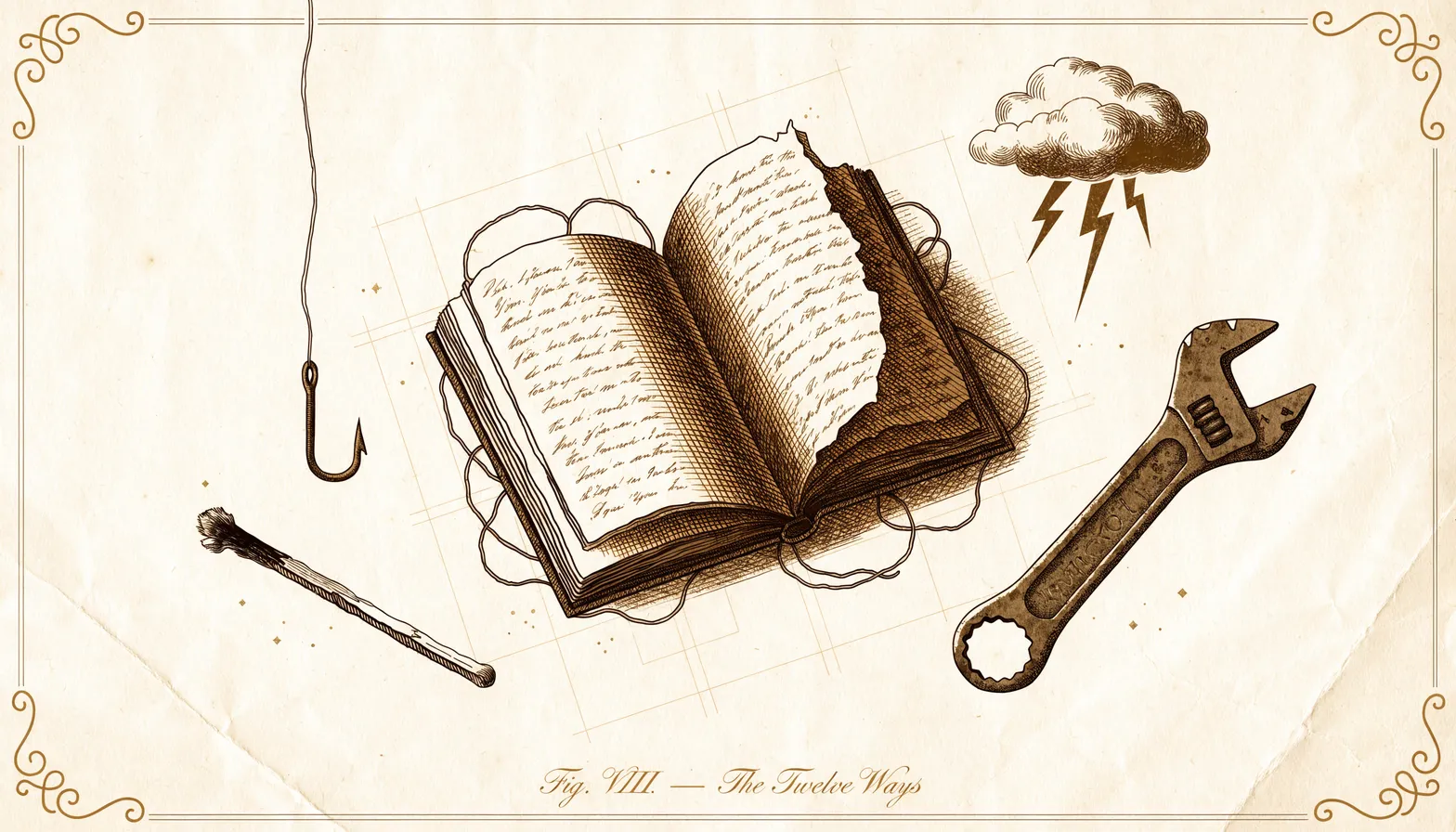
Put the taxonomy on the table. The documented losses sort into three families of four. Lost by your own hand: no backup at all; one backup that shared its disaster with the device; the half-remembered passphrase; the transaction sent to a wrong or swapped address. Taken by someone else: exchange failure; phishing and fake support; clipboard and address-swap malware; coercion of a single key holder. Left behind: death without a plan; the seed a stranger finds; the target you painted on yourself by talking; the excellent setup that was never revisited as life moved on. Twelve entries, and between them they account for the overwhelming majority of coins that have ever been lost or stolen from individuals.
Notice what is missing from the list: broken cryptography. Nobody's coins on that list were taken by factoring a key or forging a signature. The maths holds; the operations fail. That is genuinely good news, because it means the entire threat landscape a household faces is made of preventable, rehearsable, boring failures — and the earlier modules of this school were each, quietly, a fix for several of them. The steel-and-drill doctrine of Module 3 kills the first two outright. Module 4's separated passphrase backup kills the third. The device-screen habit from Modules 2 and 5 kills the address swaps. Module 1 settled the exchange question, and Module 7's quorum makes coercion of any one person structurally useless.
The family worth extra respect is the third, because it operates on the longest timescale and against your least-rehearsed self. Coins die with their owners at scale — several million BTC are already stranded that way — and grief is a phishing opportunity: scammers read obituaries and arrive as "recovery services" precisely when a family knows there was bitcoin but not where or how. The visibility failures compound slowly too: the conference badge, the bull-market post, the leaked customer database with your delivery address in it. Jameson Lopp's public log of physical attacks on bitcoiners has recorded a sharp acceleration through the 2020s, and nearly every case began with the attacker knowing two facts — that a target held coins, and where they lived.
The deepest entry on the list is the twelfth: the setup never revisited. An arrangement that was excellent in 2020 quietly rots — a house move that orphaned a backup, a divorce that reassigned trust, a vendor that folded, an heir who grew up, a firmware epoch that passed the device by. No attacker is required; entropy does the work. This is why the school's final module is an annual review rather than a victory lap, and why the fix for item twelve is a calendar entry, not a purchase.
Use the printable field note attached to this module as the working tool: all twelve items, each with THE FIX in one line, designed to be read with your own arrangement in mind. Read it the uncomfortable way — not "which of these could happen to someone", but "which of these is true of me today". Most holders find at least one. The doubt you feel at that line is the finding; Modules 3, 7 and 9 are where its fix lives, and this week — not after the next rally — is when the fix is cheap.
Field document · Printable
Take this module off-screen.
An A4 handout to print, mark up, and keep with your custody records — seeds and worksheets belong on paper, not screens.
Free account required
“An ounce of prevention is worth a pound of cure.”
“Lost coins only make everyone else's coins worth slightly more. Think of it as a donation to everyone.”
Reading ladder
Climb at your own pace.
Sign in to check off reads
Beginner
Inventing Bitcoin
Yan Pritzker · 2019
Why there is no undo button — the settlement finality behind every loss story.
Intermediate
10x Security Bitcoin Guide
Michael Flaxman · 2020
A setup designed against this exact failure list.
Deep
Cryptoasset Inheritance Planning
Pamela Morgan · 2018
The definitive treatment of the "left behind" family.
Field test
Take the quiz. Track the curriculum.
The module text is open to everyone, no account needed. The 3-question field test and the curriculum-wide graduation stamp need a free account so we can record your progress.
Registration takes an email or a Nostr key, and either way 7 days of VIP come with it.